


Better Science,Better Health
Better Science,Better Health
Baheal Medical, in collaboration with Peking University International Hospital, has initiated a Real World Study (RWS) on brain metastases to accelerate the clinical validation of stereotactic radiosurgery technology. The announcement was made during the “Frontiers in Stereotactic Radiosurgery (SRS) Technology and Clinical Advances in Brain Tumor Treatment” academic exchange conference held at Peking University International Hospital on December 5, 2025. Nearly 30 leading experts from more than ten top-tier medical institutions in China, including Peking University International Hospital, Peking Union Medical College Hospital, Xuanwu Hospital Capital Medical University, and the First Medical Center of Chinese PLA General Hospital, gathered to discuss advances in multidisciplinary brain tumor management and global trends in stereotactic radiotherapy for brain metastases.
Brain metastases represent one of the most clinically challenging manifestations of intracranial tumors and are most commonly associated with advanced malignant diseases, particularly gliomas and metastatic tumors originating from multiple primary cancer types. As the key indicator of advanced-stage cancer, brain metastases pose substantial therapeutic challenges in clinical practices. In China alone, approximately 1.5 million new cases are diagnosed each year, underscoring the urgent need for more precise and effective treatment approaches—an unmet clinical need that the newly initiated study aims to further address through real-world evidence generation.
The ZAP-X Gyroscopic Radiosurgery System (ZAP-X) is a dedicated stereotactic radiotherapy platform designed for the treatment of intracranial and head-and-neck tumors. The system has obtained market approval in 24 countries and regions and has completed more than 5,000 clinical treatments worldwide. By enabling thousands of non-coplanar beam angles, it allows highly precise tumor targeting while minimizing radiation exposure to surrounding healthy tissue, offering a differentiated approach to stereotactic radiosurgery in brain tumor management.
In China, Peking University International Hospital, together with Baheal Medical, has established a Precision Radiotherapy Center and introduced ZAP-X system to further explore its clinical application in brain tumor treatment. Building on this clinical infrastructure, the two parties have formally launched the Real World Study to generate post-market clinical evidence on treatment outcomes. The study is designed to evaluate the clinical performance of stereotactic radiosurgery across different subtypes of brain metastases, with the goal of strengthening evidence-based treatment strategies and improving both survival outcomes and quality of life for patients.
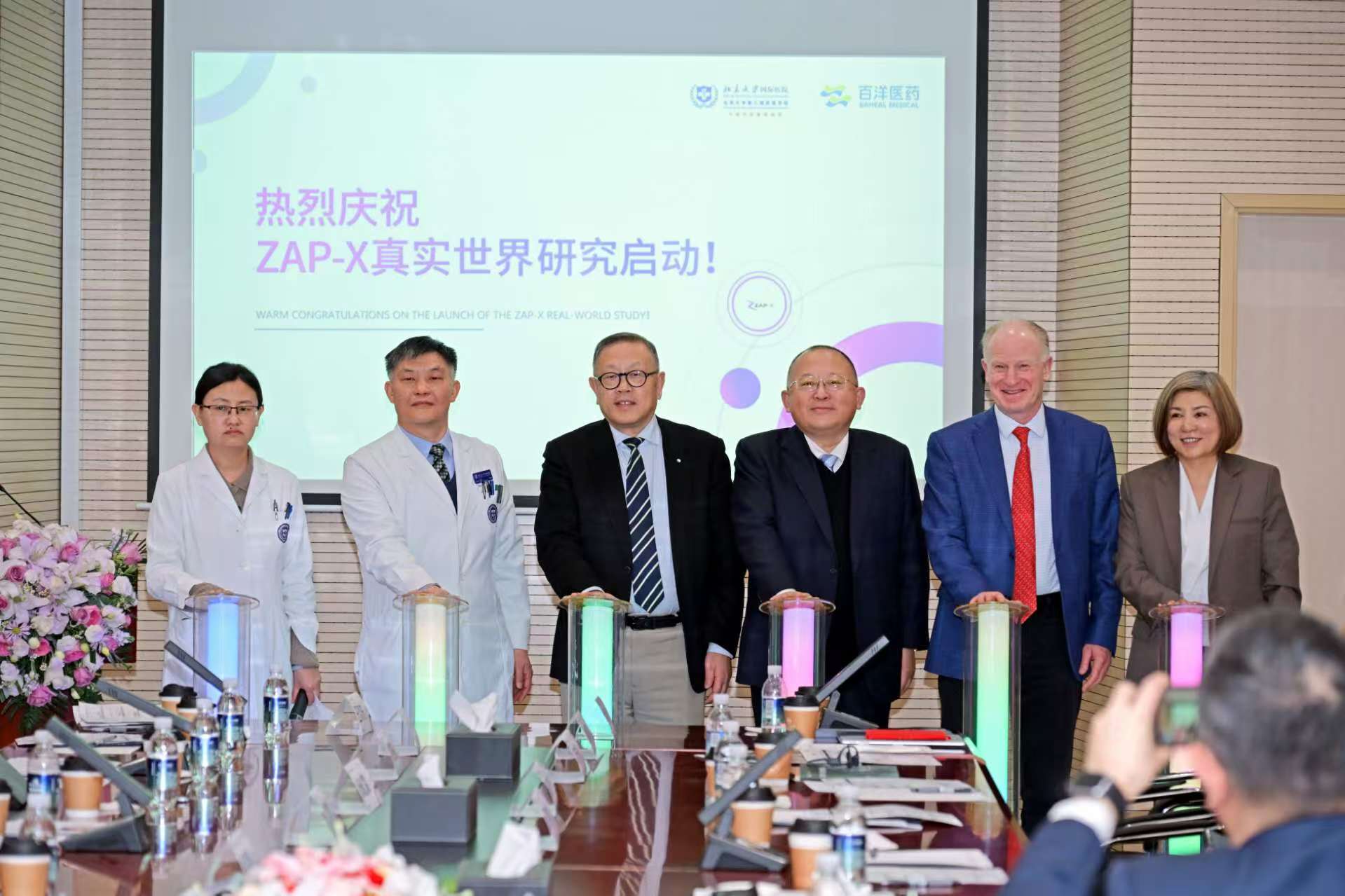
Signing Ceremony
Professor Liang Jun, Chairman of the Conference, Secretary of the Party Committee and Executive President of Peking University International Hospital, stated that brain tumor management is entering a new phase of multidisciplinary integration. He emphasized that the conference brought together expertise from oncology, neurosurgery, and radiation oncology to support the advancement and clinical translation of precision treatment technologies.

Professor Liang delivered a speech.
Mr. Fu Gang, Chairman of Baheal Pharma Group, noted that the integration of industry, academia, research, and clinical practice is essential for accelerating the translation of innovative technologies into clinical application. He stated that Baheal will continue to advance the development of an evidence-based clinical research framework for ZAP-X in China, support the standardized adoption of stereotactic radiotherapy technologies, and facilitate their broader clinical implementation.

Professor Nie Shaoping, Vice President of Peking University International Hospital, and Professor Zhao Yuanli, Director of Neurosurgery, highlighted the importance of advancing a standardized and individualized diagnostic and treatment system for brain metastases. They also outlined the hospital’s ongoing efforts in strengthening multidisciplinary collaboration and clinical innovation in neuro-oncology.


During the thematic session, Professor John R. Adler, a pioneer in stereotactic radiosurgery and Honorary Professor of Neurosurgery and Radiation Oncology at Stanford University, reviewed the evolution of radiosurgical technology. He emphasized that precision represents not only a technological objective but also a core determinant of therapeutic outcomes and patient prognosis.

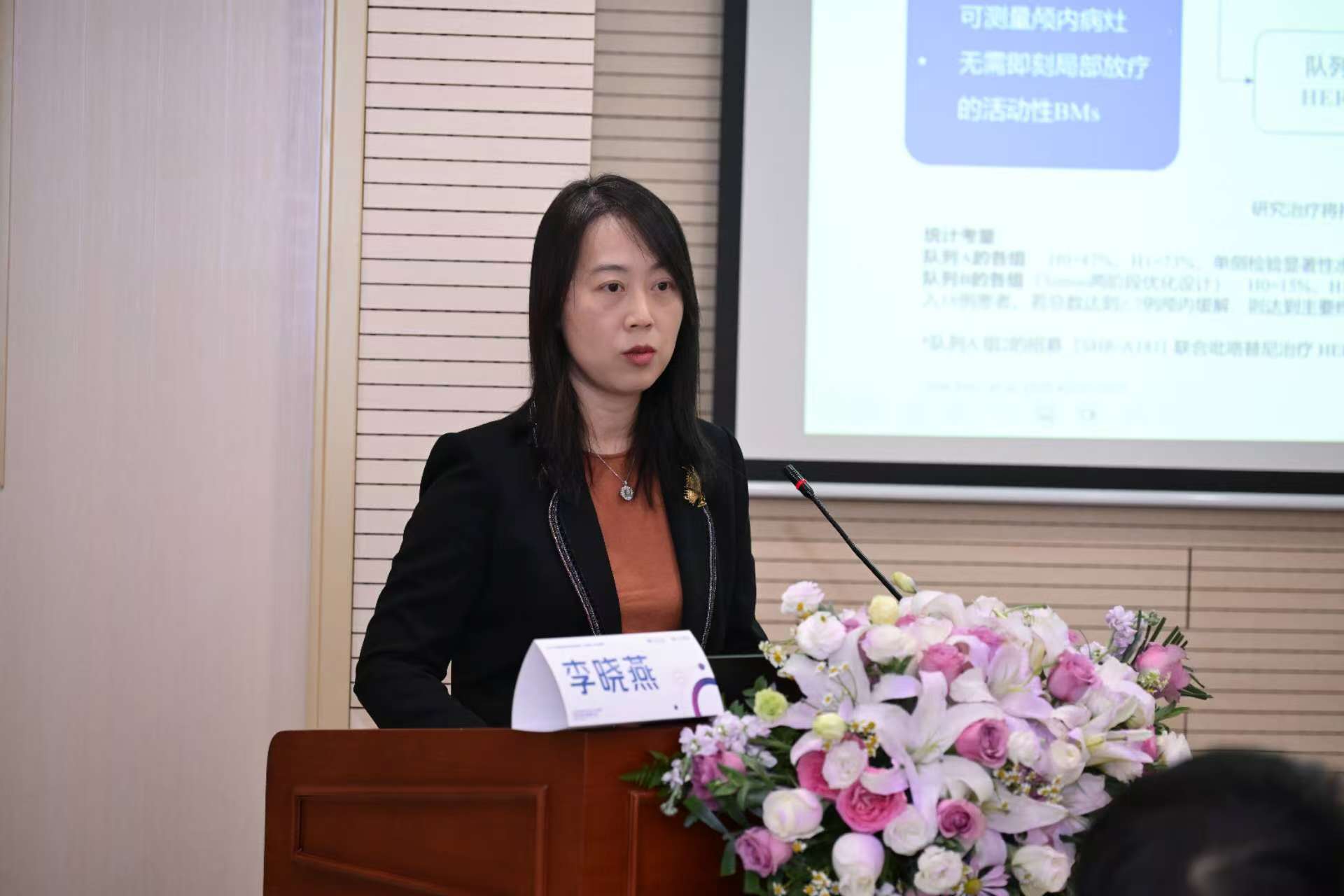
Professor Li Xiaoyan, Deputy Director of the Cancer Center at Beijing Tiantan Hospital, Capital Medical University, presented recent advances in systemic therapies for brain metastases, including targeted therapy, immunotherapy, and novel chemotherapeutic agents. She further highlighted that multidisciplinary team (MDT) collaboration plays a critical role in extending patient survival.
Professor Xu Lixin from the Gamma Knife Center of Xuanwu Hospital, Capital Medical University, shared clinical experience and future perspectives in the multidisciplinary management of brain metastases. He also introduced the establishment and progress of the Chinese Intracranial Metastasis Collaboration Group, emphasizing the need for standardized treatment protocols and consensus building.

Professor Xu delivered a speech.
Professor Pan Longsheng from the First Medical Center of the PLA General Hospital presented clinical trial experience with the ZAP-X system, focusing on real-world application, technical considerations, and patient selection strategies.

At the conference, the “Baheal Brain Metastases Pioneer Program” was officially launched. The program aims to address the growing clinical burden of brain metastases in China by advancing a structured framework across three dimensions: academic organization building, clinical research collaboration, and optimization of care delivery pathways. It integrates research, clinical practice, and patient management to support the development of standardized and precision-based treatment systems for brain metastases.
In closing remarks, Professor Liang Jun reaffirmed the value of the conference in fostering academic exchange and advancing clinical practice. He expressed expectations that the real-world study of ZAP-X would further strengthen multi-center collaboration and accelerate innovation in brain tumor treatment, contributing to the continued advancement of China’s healthcare system.
Baheal Medical Inc. Lands on ChiNext Board Today!
Baheal Medical New Retail Business: Cute Camel Store 2.0 Opened in Qingdao
Baheal Receives Four Honors at China Future Healthcare Rankings Top 100
BAHEAL Pharmaceutical Group Accepted by International Federation of Pharmaceutical Wholesalers
Baheal Medical Launches Commercialization Platform of Efficacious Cosmetics